
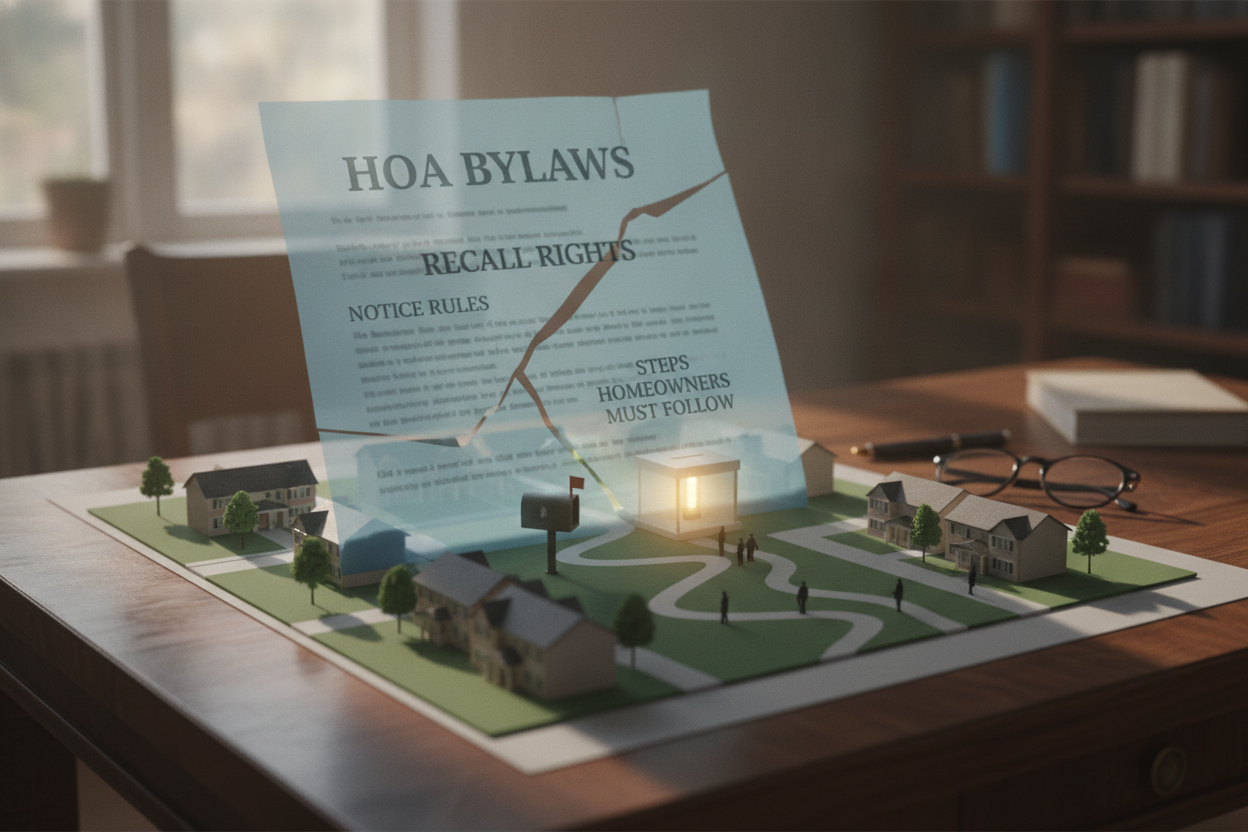
HOA bylaws are often the roadmap for a recall effort. They may define who can be removed, how many signatures are needed, when a special meeting may be called, and what notice must be given to owners. Because these rules vary widely from one association to another, homeowners should never assume that another community’s process applies to their own.
Reading the bylaws closely can reveal both opportunities and obstacles. Some associations make recall relatively straightforward, while others impose strict timing or voting requirements. If the bylaws are outdated or unclear, the board may interpret them one way and the homeowners another. That is why a careful review of the exact language is so important before any petition is circulated.
It is also wise to compare the bylaws with state law. In many cases, state statutes set minimum standards that associations cannot waive. If there is a conflict between the two, the legal hierarchy may determine which rule controls. Homeowners who understand that relationship are better prepared to challenge improper procedures or defend a valid recall effort.
Bylaws are not just paperwork; they are the framework that keeps the process orderly. When homeowners know how the rules work, they can organize more effectively, avoid technical mistakes, and focus on the substance of their concerns. That preparation makes the recall process more credible and more likely to succeed when community support is strong.
Leave a Reply