
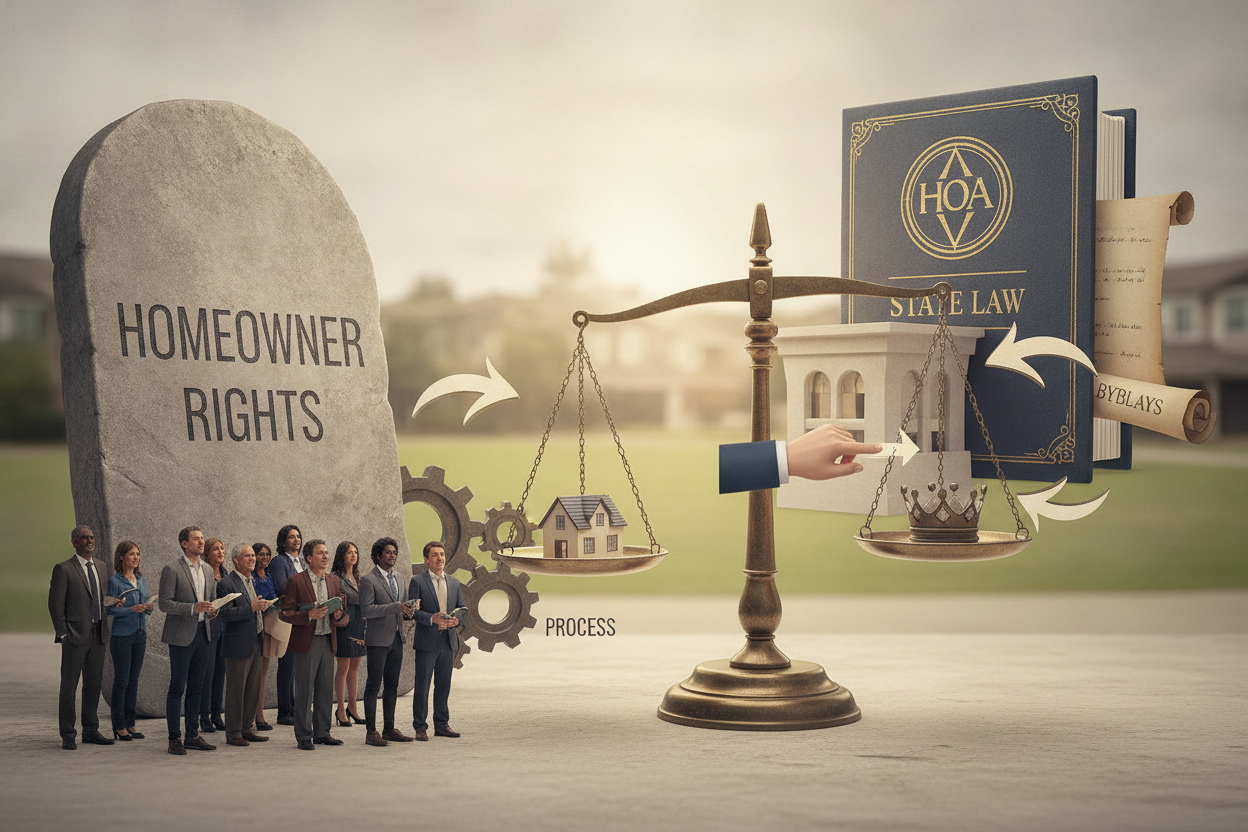
Homeowner rights are at the center of any HOA recall discussion. While associations often have their own rules, those rules must still fit within state law and the governing documents. For residents, that means the first question is not just whether a recall is possible, but what legal framework controls it. In many communities, the answer depends on a combination of statutes, bylaws, and recorded covenants.
Understanding those rights can help homeowners avoid confusion. Some communities require a petition signed by a specific percentage of members, while others require a special meeting or a formal vote. The process may also include notice requirements, ballot procedures, and deadlines for counting signatures. Knowing the details ahead of time gives homeowners a better chance of using the process correctly and fairly.
It is also important to distinguish between dissatisfaction and a legally valid recall basis. Homeowners may be upset about increased dues, rule enforcement, or maintenance decisions, but the governing documents determine whether those concerns can support a recall effort. That is why many residents benefit from reviewing the bylaws line by line and keeping notes on any provisions that appear unclear or outdated.
A recall is ultimately a governance tool, not just a protest. When used properly, it allows members to hold directors accountable while preserving the structure of the association. That balance matters because a community functions best when rights, responsibilities, and procedures are all respected. For homeowners, learning those rights is the first step toward effective civic participation.
Leave a Reply